
INFLAMMATION
Anti-Inflammatory Lifestyle: 7 Daily Habits
Medically reviewed by Fawad Ahmed, MD on
Published · Updated
A comprehensive approach to reducing inflammation and supporting overall health through natural lifestyle interventions — sleep, light therapy, nature connection, movement, and diet.
Book a Consultation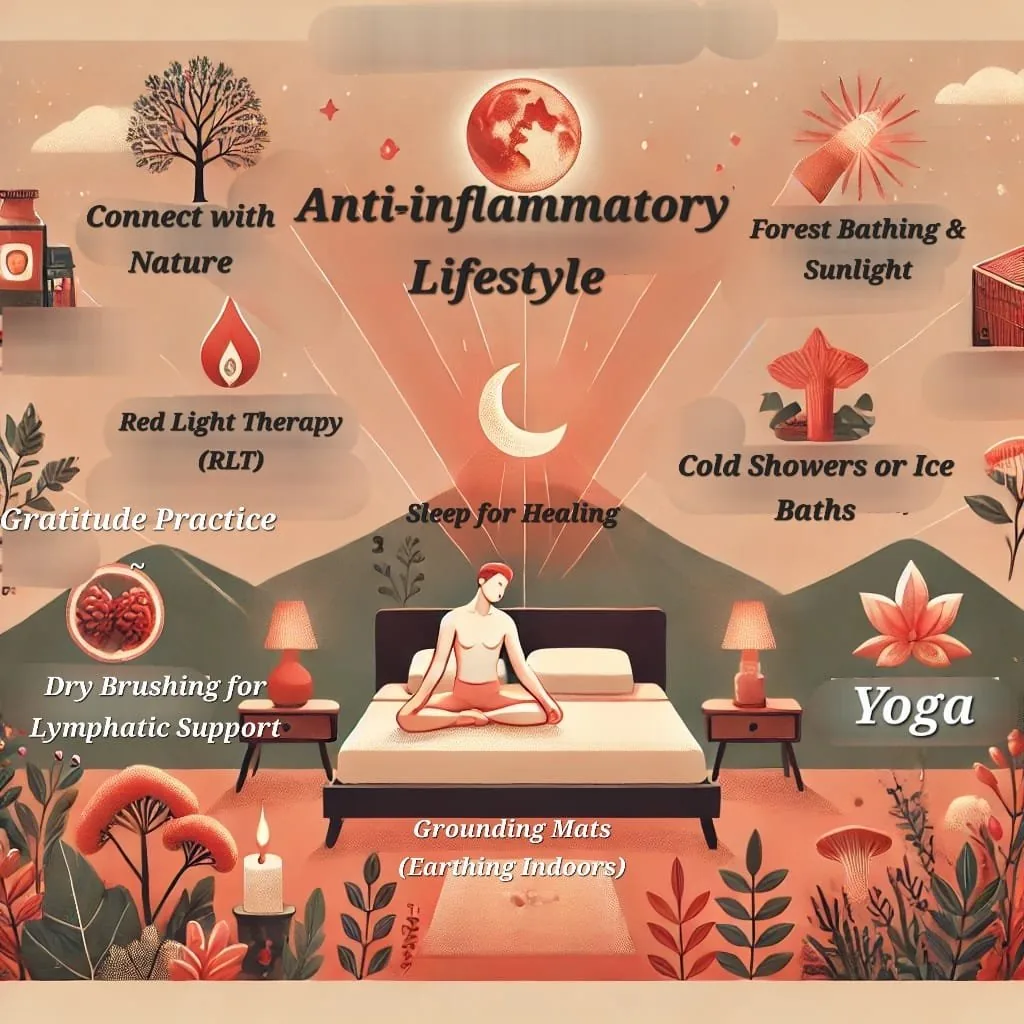
A comprehensive approach to reducing inflammation and supporting overall health through natural lifestyle interventions.
1. Sleep
Quality sleep is essential for reducing inflammation and supporting the body's natural healing processes.
Routine
Sleep and wake at the same time daily, even on weekends.
Wind-down
Limit screens 1 hour before bed. Dim or reduce blue light after 6pm. Use warm indirect lights or candlelight.
Sleep environment
Keep the room cool (65–68°F), dark, and quiet. Use blackout curtains.
Bonus
Use a weighted blanket to calm the nervous system.
Supplements
Consider magnesium glycinate 400–800 mg at bedtime or tart cherry juice (natural melatonin).
Breathing
Practice 4-7-8 breathing before sleep to reduce cortisol.
What to avoid
Alcohol and caffeine 6 hours before bed.
2. Red light therapy
Red light therapy uses visible red light wavelengths, typically between 630 and 700 nanometers (nm).
Recommended use
- Frequency: 3–5 times per week
- Duration: 10–20 minutes per session
- Time of Day: Morning or early evening (avoid close to bedtime if it energizes you)
Reported benefits
- Reduces inflammation and joint pain (e.g., arthritis)
- Boosts collagen production (anti-aging, skin healing)
- Improves muscle recovery and reduces soreness
- Supports thyroid function
Tip: Use a device with a combination of near-infrared (NIR) and red light.
3. Time in nature
Daily sun exposure
15–20 minutes, ideally during the first hour of the day (regulates circadian rhythm).
Forest bathing
Spend time in green spaces 2–3 times a week (lowers cortisol, boosts immunity).
Earthing
Walk barefoot on grass, soil, or sand for 15 minutes daily to absorb negative ions (reduces inflammation and stress).
Bonus
Listen to natural sounds (birds, wind) to relax the nervous system.
4. Grounding mats
Earthing indoors with grounding mats can provide many of the same benefits as direct contact with the earth.
How to use them
Place under your feet while working or sleeping (use for 30 minutes to overnight).
Reported effects
Reduces inflammation by neutralizing free radicals; lowers cortisol levels and improves sleep; reduces pain from conditions like arthritis or migraines.
Tip: Use a grounding mat made from conductive materials like carbon or silver threads.
5. Yoga
Specific yoga poses can help reduce inflammation and pain in different parts of the body.
Poses for inflammation and joint pain
Child's pose (Balasana)
Reduces lower back inflammation and calms the mind. Hold for 2 minutes.
Legs-up-the-wall (Viparita Karani)
Reduces swelling in legs and feet. Hold for 5 minutes.
Cat-cow stretch
Improves spinal flexibility and reduces inflammation. Do 10 rounds.
6. Dry brushing
Dry brushing supports lymphatic drainage and helps reduce inflammation throughout the body.
How, when and for how long
How
Use a natural bristle brush, starting at your feet and brushing upwards toward your heart, in long sweeping motions.
When
Before showering, 2–3 times per week.
Duration
3–5 minutes.
Tip
Follow with a cold shower for extra anti-inflammatory benefits.
Benefits
Stimulates lymphatic drainage (reduces inflammation), exfoliates dead skin, boosts circulation.
7. Anti-inflammatory diet
What you eat has a profound impact on inflammation levels in your body.
Foods to eat more of
Fatty Fish (salmon, sardines)
Omega-3s fight inflammation
Leafy Greens (spinach, kale)
Rich in antioxidants
Berries (blueberries, raspberries)
High in polyphenols
Turmeric with Black Pepper
Potent anti-inflammatory duo
Fermented Foods (kimchi, sauerkraut)
Supports gut health
Bone Broth
Supports joints and reduces gut inflammation
Healthy Fats
Avocados, olive oil, chia seeds, walnuts
Herbs & Spices
Ginger, garlic, rosemary, and cinnamon
Hydration
2–3 liters of water daily (add lemon or cucumber for extra antioxidants)
Foods to limit
- Processed foods — Chips, sweets, refined grains
- Vegetable oils — Canola, soybean oil
- Sugary beverages
- Excess alcohol
- Red meat — Limit to grass-fed and three times a week
More lifestyle habits
Cold showers or ice baths
1–2 minutes post-workout to reduce muscle inflammation
Intermittent fasting
14–16 hours overnight fast (promotes cellular repair and reduces inflammation)
Gratitude practice
Reduces stress-related inflammation markers (e.g., cortisol)
If you want to learn more about how an anti-inflammatory lifestyle can support gut health and whole-body health, book a consult with an Avicenna Functional Medicine practitioner.
Further reading
For more on this topic from independent sources:
- Furman D, et al. “Chronic inflammation in the etiology of disease across the life span.” Nature Medicine, 2019. https://pmc.ncbi.nlm.nih.gov/articles/PMC7147972/
- National Heart, Lung, and Blood Institute (NHLBI). “Sleep Deprivation and Deficiency.” https://www.nhlbi.nih.gov/health/sleep-deprivation
- National Center for Complementary and Integrative Health (NCCIH). “Yoga: Effectiveness and Safety.” https://www.nccih.nih.gov/health/yoga-effectiveness-and-safety
If you’re interested in taking a proactive approach to your health, book a 30-minute discovery call.
Book a Discovery Call