
Skip to content

Vagus nerve stimulation

Vagus Nerve Stimulator: How It Works and What the Research Shows

A vagus nerve stimulator, sometimes called a vagal nerve stimulator, sends a gentle electrical pulse to the vagus nerve, which helps your body shift into “rest and digest”. Some are implanted by a surgeon; others clip onto the ear for use at home. Here’s how they differ, what the research does and doesn’t show, and who should avoid them.

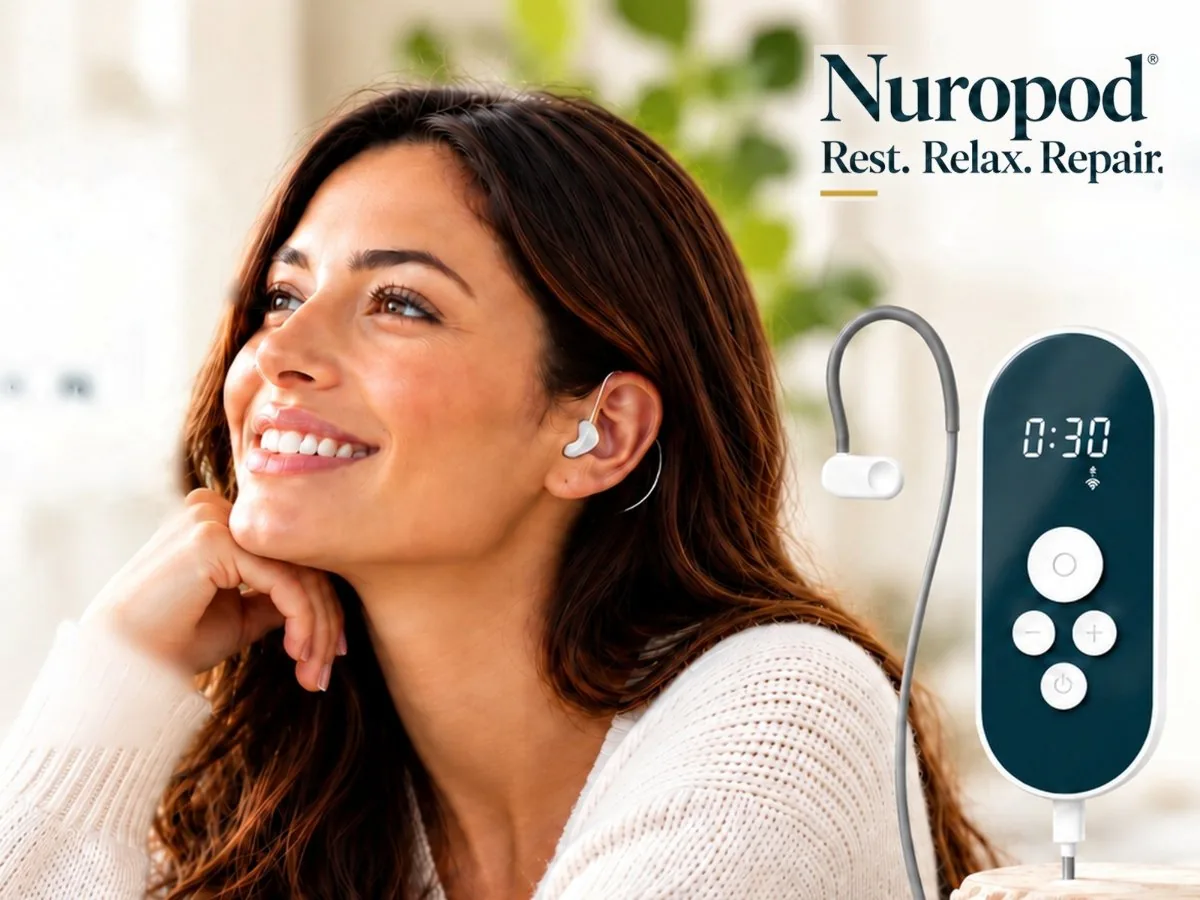
Woman relaxing while wearing the Nuropod vagus nerve stimulator on her earSave 10% on the Nuropod

What is the vagus nerve?

The vagus nerve runs from the brain to the heart, lungs and gut. It’s a main part of the parasympathetic nervous system, the side that helps you rest, digest and recover after stress.

Implanted and at-home vagus nerve stimulators

Implanted stimulators

A surgeon places a small device under the skin of the chest, with a wire to the vagus nerve in the neck. The FDA has approved implanted stimulators for hard-to-control epilepsy, for depression and as a rehabilitation aid after stroke, and in 2025 for rheumatoid arthritis.

Ear-based stimulators for home use

One branch of the vagus nerve reaches the skin of the outer ear. Ear-based devices, called transcutaneous auricular vagus nerve stimulation (taVNS), clip onto the small flap in front of the ear canal (the tragus) and send a mild pulse through the skin. Most people feel a light tingle. One such device is the Nuropod, made by Parasym.

Ear devices are sold as wellness products, not as treatment for any condition. Cleveland Clinic notes that devices outside the body can’t reach the nerve as precisely as an implant.

What the research shows

  • Research on ear-based vagus nerve stimulation is growing, but most studies are small and short.
  • Relaxation and sleep: early studies suggest it may help some people sleep better, but reviewers rate the quality of the evidence as low.
  • Heart rate variability (HRV): a review of placebo-controlled studies found no clear short-term change.

Studies that used a Parasym device

Parasym makes the Nuropod and says it uses the same technology as the devices in its research. Study devices, settings and schedules may still differ from the Nuropod sold today, and the schedules below describe the studies, not how to use the Nuropod.

POTS (postural orthostatic tachycardia syndrome)

Stavrakis et al., 2024

The study:
26 women, randomized and double-blind: an ear clip on the tragus (active) or on the earlobe (sham), 1 hour a day for 2 months.
What it found:
The rise in heart rate on standing was smaller with active stimulation (17.6 vs 31.7 beats per minute).
What it doesn’t show:
Overall symptom scores weren’t significantly different, so the authors couldn’t conclude that patients felt better. Small, and women only.

Atrial fibrillation (AF)

TREAT AF, Stavrakis et al., 2020

The study:
53 people whose AF comes and goes (paroxysmal AF), randomized and double-blind: tragus or earlobe, 1 hour a day for 6 months.
What it found:
At 6 months, the median time spent in AF was 85% lower in the active group than in the sham group.
What it doesn’t show:
A difference between two groups, not a cure rate. It doesn’t show stroke prevention, and it’s no reason to stop blood thinners or other heart treatment.

Heart failure with preserved ejection fraction (HFpEF)

Stavrakis et al., 2022

The study:
52 adults, randomized and double-blind pilot: tragus or earlobe, 1 hour a day for 3 months.
What it found:
A measure of heart muscle function (global longitudinal strain), an inflammation marker (TNF-α) and quality of life were better in the active group.
What it doesn’t show:
A pilot that measured markers, not hospital stays or survival. It doesn’t make the Nuropod a heart failure treatment.

Long COVID

Zheng et al., 2024

The study:
24 women, no placebo group: Parasym’s AVNT system on the left ear, 30 minutes twice a day for 10 days at home.
What it found:
Thinking, anxiety, depression and sleep scores improved, and fatigue had improved by the 1-month check. Sense of smell didn’t change.
What it doesn’t show:
Without a placebo group, expectation or natural recovery may explain the changes.

Studies of other ear stimulation devices

These used other devices, or don’t name the maker. They show what ear stimulation has done in research, not what the Nuropod does.

Fibromyalgia

Dolcini et al., 2025

The study:
18 patients, no comparison group, 30 minutes 5 times a week for 4 weeks. The paper’s summary names the method (AVNT) but not the device maker.
What it found:
Scores for widespread pain, fibromyalgia impact and sleep improved. A blood marker (BDNF) didn’t change.
What it doesn’t show:
Small, short and without a placebo group. It doesn’t show remission or an established treatment.

Long COVID fatigue

COVIVA, Gierthmuehlen et al., 2026

The study:
45 people, randomized to sham, weak or stronger stimulation with the tVNS-L device, 4 hours a day for 4 weeks.
What it found:
Fatigue scores improved in all three groups, including sham: active stimulation did no better than sham. A few people had mild skin irritation or dizziness.
What it doesn’t show:
A different device and schedule, but a reminder that people can improve without active stimulation.

Lupus pain and fatigue

Aranow et al., 2021

The study:
18 people with lupus and joint or muscle pain, randomized 2:1 and double-blind, stimulation on 4 days in a row.
What it found:
Pain and fatigue fell more than with sham, and stayed lower through day 12.
What it doesn’t show:
Very small and brief. It doesn’t show fewer flares or protection of the kidneys or other organs, and it’s no reason to lower lupus medicines.

A planned study

A protocol describes what researchers plan to test. It isn’t a result.

Lupus

Contreras et al., 2023 (protocol, NCT05704153)

The study:
A planned randomized, double-blind, placebo-controlled study of ear stimulation in at least 18 people with lupus.
What it found:
No results yet. The trial registry lists its status as unknown and shows no posted results (checked November 15, 2026).
What it doesn’t show:
Nothing can be concluded from it until results are published.

What these studies don’t show

  • None of them shows that the Nuropod treats, cures or prevents any of these conditions, and it isn’t FDA-cleared for any of them.
  • Most were small and short, and some had no placebo group, so their improvements may come from expectation or natural recovery.
  • If you have atrial fibrillation, don’t stop blood thinners or heart medicines. If you have lupus, don’t lower your lupus medicines.
  • A device like this doesn’t replace medical treatment. Talk to your clinician before you change anything in your care.

Is a vagus nerve stimulator safe for you?

The Nuropod’s maker says not to use it if:

  • You have had surgery to cut the vagus nerve (cervical vagotomy)
  • You have trigeminal neuralgia
  • You have a pacemaker or another active implanted device
  • Your resting heart rate is very slow (severe bradycardia)
  • You have metal or electronic implants, or jewelry you can’t remove, near the spot where the ear clip goes
  • You are pregnant

Ask your clinician first if:

  • You have a heart condition
  • You have epilepsy or have had seizures
  • You are under 18

Don’t use it while sleeping or exercising. The maker lists a light tingle and mild discomfort or redness where the clip sits, and, rarely in the first weeks, mild nausea, headache or feeling off. Stop and contact your clinician if anything worries you. In an emergency, call 911.

Questions about vagus nerve stimulators

Is a vagal nerve stimulator the same as a vagus nerve stimulator?
Yes. “Vagal” means “of the vagus nerve”, so both names describe the same kind of device.
Is the Nuropod FDA approved?
No. We found no FDA clearance or approval for the Nuropod. Its maker sells it as a wellness device and says it isn’t intended to diagnose, treat or prevent any disease.
Can a vagus nerve stimulator replace my medicine?
No. Keep taking your medicines, and talk to your clinician before you change anything in your care.
Can I return the Nuropod if it isn’t for me?
Yes, within 30 days of the day you receive it, if it’s clean, undamaged and in its original packaging with all its accessories. Email Nuropod at care@nuropod.com before you send it back.
Does Avicenna earn money if I buy one?
Yes. Avicenna earns a commission on purchases made through our link. Buying one is optional, and it isn’t part of, or required for, your care.
Woman relaxing while wearing the Nuropod vagus nerve stimulator on her ear

Trying the Nuropod

The Nuropod costs $900 on the maker’s US website (November 15, 2026). If it isn’t for you, you can return it within 30 days of the day you receive it, clean, undamaged and in its original packaging, after emailing Nuropod first.

Parasym is separate from Avicenna. Avicenna earns a commission on purchases made through this link, and the 10% discount is open to anyone who uses it. Buying is optional and isn’t part of, or required for, your care.

Save 10% through this link

Shop the Nuropod

Not sure it suits you? Patients can ask at their next visit. New to Avicenna? Book a free discovery call. Visits are by telehealth for patients located in Florida and Texas.

Read our medical disclaimer

Sources

  1. Cleveland Clinic: Vagus nerve stimulation
  2. FDA: SetPoint System (implanted VNS for rheumatoid arthritis), approval P240039, 2025
  3. Wolf et al., Psychophysiology, 2021: taVNS and heart rate variability (sham-controlled studies)
  4. de Oliveira et al., Neuromodulation, 2025: taVNS and sleep (systematic review)
  5. Stavrakis et al., JACC Clinical Electrophysiology, 2024: POTS randomized trial
  6. Stavrakis et al., JACC Clinical Electrophysiology, 2020: TREAT AF randomized trial
  7. Stavrakis et al., Journal of the American Heart Association, 2022: HFpEF pilot randomized trial
  8. Zheng et al., Frontiers in Neurology, 2024: Long COVID pilot study in women
  9. Dolcini et al., Clinical and Experimental Rheumatology, 2025: fibromyalgia pilot
  10. Gierthmuehlen et al., Neurology and Therapy, 2026: COVIVA long COVID fatigue trial
  11. Aranow et al., Annals of the Rheumatic Diseases, 2021: lupus pain and fatigue pilot
  12. Contreras et al., JMIR Research Protocols, 2023: lupus trial protocol
  13. ClinicalTrials.gov: NCT05704153
  14. Nuropod: safety questions (the maker’s FAQ)
  15. Nuropod: refund policy

* Our approach complements not replaces conventional medical care. Always consult your physician or qualified healthcare provider before making changes to medications, treatment, or care plan. Read our full Medical Disclaimer.