
Comprehensive Gut Health Testing: What It Looks At
Comprehensive gut health tests, such as the GI-MAP and the Gut Zoomer, use a stool sample to check many things at once, from gut bacteria and germs that cause infection to markers of digestion and inflammation. Both are laboratory-developed tests, and tests like these generally have not been through FDA review. They do not replace standard medical tests. At Avicenna Functional Medicine, a licensed clinician on our team decides whether testing is likely to be useful for you, and results are reviewed alongside the care you get from your primary care doctor or gastroenterologist.1, 4, 5, 6, 9, 12
Medically reviewed by Fawad Ahmed, MD on · Last updated
What is comprehensive gut health testing?
Comprehensive gut health tests are stool tests that report on many parts of gut health in one panel. Diagnostic Solutions Laboratory (DSL) calls its GI-MAP "a comprehensive stool test." Vibrant Wellness says its Gut Zoomer gives "a comprehensive view" of the gut and the gut–brain axis, covering microbiome balance, germs that cause infection, inflammation, digestion, gut permeability and more.1, 5
Your microbiome is the collection of microbes, such as bacteria, fungi and viruses, and their genes, that naturally live on and inside your body. These microbes help protect you against germs, help your immune system develop, and help you digest food to make energy. Your microbiome can change over time with diet, medicines and things in your environment.8
Your gut microbiome can't easily be checked while it is inside your body, but it can be studied from a stool sample. Many companies offer gut microbiome tests that claim to help you learn about your health. But microbiome science is quite new. The field is only about 20 years old, and researchers are still learning a lot.9
Both of these tests must be ordered by a clinician. DSL says a healthcare practitioner needs to order the GI-MAP for you, and Vibrant lists the Gut Zoomer as "Clinician Order Required." Experts also recommend that microbiome tests be requested by licensed health professionals rather than ordered by patients on their own.1, 2, 5, 11
Signs that need a standard checkup first
Many people who seek microbiome tests live with long-term gut problems. Many health problems can cause gut symptoms like those of irritable bowel syndrome (IBS), so doctors may order tests to rule them out. A comprehensive stool test is not a substitute for that checkup, and relying on one could delay the care you need. Your doctor may suggest other tests if you have:5, 9, 10, 19
What the tests look at
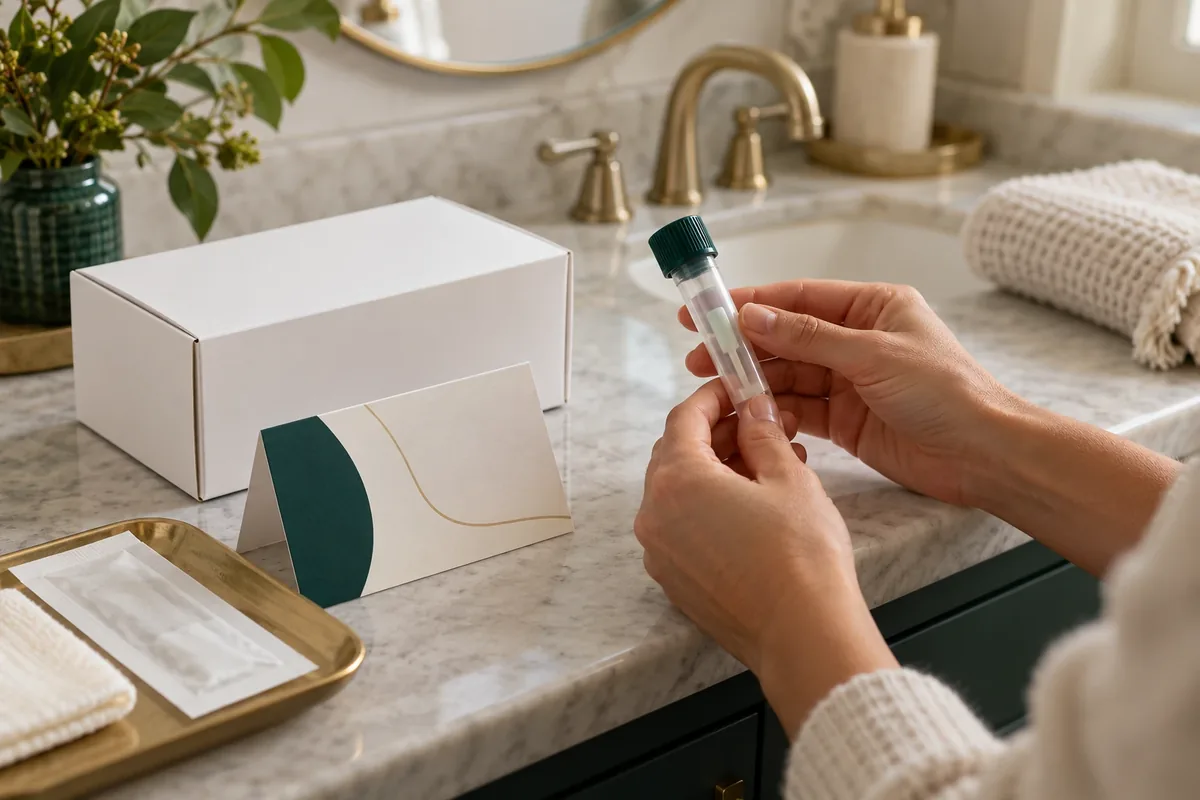
Both tests use a kit you collect at home. DSL says the GI-MAP uses a single stool sample, which is then sent to the lab. Vibrant lists both stool and urine samples for the Gut Zoomer, which reports its neurotransmitter markers from urine.1, 2, 5, 6
Each lab groups its markers a little differently, but both cover these areas (some only as add-ons):1, 2, 5, 7
- Gut microbes: the normal (commensal) bacteria that live in the gut, and the main groups of bacteria, called phyla. The Gut Zoomer also gives diversity scores, which describe how many kinds of bacteria are present and how evenly they are spread.2, 3, 5, 6
- Germs that can cause infection: bacteria, parasites and viruses commonly known to cause gut infections (gastroenteritis), such as C. difficile, Salmonella, Giardia and norovirus. Both tests also check for H. pylori, a germ that can cause stomach ulcers, and for genes linked to H. pylori resisting antibiotics.1, 3, 7
- Yeast and parasites: yeasts such as Candida and other fungi, plus parasites, including protozoa and worms.2, 3, 7
- Digestion: pancreatic elastase-1, an enzyme made by the pancreas that helps digest protein. The Gut Zoomer also measures fat in the stool and checks for undigested meat and vegetable fiber.1, 5, 6, 7
- Inflammation: calprotectin, a protein that white blood cells release into the intestines when they are inflamed. Both tests also measure an eosinophil protein (EDN or EPX), and the Gut Zoomer adds other markers, such as lactoferrin.1, 3, 5, 17
- Immune response: secretory IgA, an antibody that helps protect the gut lining, and antibodies linked to gluten, such as anti-gliadin IgA. The Gut Zoomer also lists other antibodies, such as tissue transglutaminase (tTG) and deamidated gliadin peptide (DGP).1, 3, 6, 7
- Gut barrier: zonulin, which DSL describes as a protein that helps control the tight junctions between cells in the gut. Zonulin is an add-on for the GI-MAP. Vibrant groups zonulin with antibodies, such as those to lipopolysaccharide (LPS) and actin, in its "Gut Permeability And Antibodies" section.1, 3, 6
- Other markers: blood in the stool, checked with a fecal immunochemical test (FIT), and beta-glucuronidase, an enzyme made by some gut bacteria. The Gut Zoomer also reports bile acids, short-chain fatty acids (made when gut bacteria break down complex carbohydrates), stool pH and urine neurotransmitters. DSL offers bile acids and short-chain fatty acids as a GI-MAP add-on.1, 3, 5, 6, 7
How some markers compare with standard tests
Some of these markers are also used on their own in standard care. Most often, providers use a fecal calprotectin test to help tell the difference between inflammatory bowel disease (IBD) and IBS. A calprotectin result can show whether the intestines are inflamed, but it can't find the cause, and several conditions can raise it.14, 17
The gluten-related antibody results on these panels are not the standard tests for celiac disease, though Vibrant links some of them, such as DGP, to gluten sensitivity and celiac disease. Doctors typically diagnose celiac disease with blood tests and biopsies (small tissue samples) of the small intestine. They don't recommend starting a gluten-free diet before testing, because it can affect the results.1, 5, 6, 18
How these tests are made and what that means
The exact markers depend on what is ordered. The GI-MAP has optional add-ons, and Vibrant says clinicians may order smaller panels with fewer markers, with the report covering only the panels ordered.1, 5
DSL says the GI-MAP uses quantitative PCR (qPCR), which detects germs by targeting the specific DNA of each organism tested. The report gives an estimate of how many of each microbe are in a gram of stool. DSL measures markers such as elastase, secretory IgA, calprotectin and zonulin with ELISA tests.1, 3
Vibrant says the Gut Zoomer uses several methods. It tests for germs that cause infection with real-time PCR, and for the normal gut bacteria it uses what it calls deep metagenomic PCR. It reports those bacteria as relative amounts: each kind's share of all the bacteria in the sample. Other markers are measured with ELISA, microarray chips, mass spectrometry and color-based tests.6
PCR tests look for a chosen list of organisms. DSL calls PCR methods "targeted," while sequencing methods give a general profile of the microbiome. A 2025 expert consensus says targeted tests, such as multiplex PCR panels, can be useful, but they are not microbiome tests and can't stand in for a full microbiome profile.4, 6, 11
Both are laboratory-developed tests (LDTs). DSL says each GI-MAP marker meets federal requirements for LDTs and for CLIA, the federal program that regulates labs to help ensure accurate and reliable results. Vibrant says its tests were developed by its own CLIA-certified laboratories and have not been cleared or approved by the US Food and Drug Administration (FDA).4, 5, 6, 12
Laboratory-developed tests generally have not gone through FDA premarket review, which checks both how accurately a test measures and how well it identifies a health condition. CLIA reviews whether a lab's test finds what it is meant to find, but the CLIA program does not address clinical validity: how accurately a test identifies or predicts a health condition in a patient.12
In 2024, the FDA issued a rule to include tests made by laboratories in its definition of diagnostic products. A federal court vacated (set aside) that rule in March 2025, and in September 2025 the FDA reverted its regulation to the earlier text.13
What the results can and can't tell you
The labs state limits of their own. Vibrant says its information is not meant to be used by the patient for any diagnostic purpose, and that it does not diagnose, treat or cure medical conditions. DSL notes that not everyone with a positive result for a disease-causing germ will have symptoms. It also notes that because the GI-MAP reads DNA, a toxin result reflects germs carrying the gene for a toxin, not the toxin itself.1, 3, 5, 6
Vibrant notes that one negative stool sample does not rule out a parasite or other infection. It also says its reference ranges for most tests come from healthy adults and may not fit other groups, such as children, pregnant people or people with chronic conditions.6
Research has linked changes in the gut microbiome with a broad range of conditions, both in and outside the gut. But much of this data likely shows links rather than causes.10, 11
A 2025 consensus statement by 69 experts from 18 countries found there is not enough evidence to recommend routine microbiome testing in medical care. There are currently no regulatory-approved microbiome tests to diagnose disease in the US.10, 11
Gut microbiomes differ a lot from person to person, so scientists have not been able to pinpoint a "normal" gut microbiome. Experts say there is not enough information to set strict healthy ranges for each type of microbe. There is also not enough evidence to use "dysbiosis" (imbalance) scores in reports.9, 11
Keep these limits in mind when reading a report. Both tests compare gut bacteria with reference ranges, and the Gut Zoomer also gives risk scores based on gut bacteria for areas such as IBS, IBD and SIBO.3, 6, 7
Results can also differ from lab to lab. In a study by the National Institute of Standards and Technology (NIST) of microbiome tests sold directly to consumers, researchers sent identical portions of one stool sample to seven test companies. The results were quite different. One company marked the sample as "unhealthy," while none of the others did. Three companies reported a disease-causing germ, C. difficile, and four did not. Overall, the differences between companies were as large as the natural differences between different people.9, 10
Experts recommend that any change to your care based on a result be made by your own doctor or health care professional. A NIST microbiologist advises against making major lifestyle or diet changes without talking to your doctor. The Gut Zoomer report lists supplement suggestions, and Vibrant notes that not all of them are right for everyone and advises asking a healthcare provider before taking them.6, 9, 11
The gut barrier and "leaky gut"
"Leaky gut" is a popular term for a gut lining that lets more pass through than usual, called increased intestinal permeability. "Leaky gut syndrome" is widely discussed in popular health writing, but it is not currently accepted as a formal medical diagnosis.14
Everyone's gut lets some things through, because the tight junctions between the cells of a normal gut lining are selective. After damage to the lining, such as from inflammation or some medicines, the tight junctions may open and let small particles through.14
Both labs offer zonulin as a gut barrier marker. But a 2024 review in a gastroenterology journal says leaky gut syndrome cannot be accurately diagnosed by symptoms, blood work or stool studies, and that no validated tool exists to diagnose it. The review adds that stool tests sold to consumers for leaky gut, which measure markers such as zonulin, secretory IgA, bacteria imbalances and Candida, are unregulated, and that there is little evidence to support their use in medical care.1, 5, 14
Zonulin tests have their own problems. A 2019 study found that two widely used commercial zonulin blood tests did not detect the actual zonulin protein. A 2020 letter in the journal Gut concluded that the commercial zonulin ELISA tests in wide use measure unknown proteins rather than zonulin, and that their results match other measures of gut permeability poorly. Both labs measure zonulin with ELISA tests.1, 6, 14, 15, 16
Even if a test could measure gut permeability reliably, what the result means would be unclear, and there is no standard treatment for leaky gut syndrome. There is also little to no reliable evidence that a leaky gut causes conditions often blamed on it, such as fibromyalgia, chronic fatigue syndrome, allergies, headache and brain fog.14
How our care fits alongside your primary care doctor or gastroenterologist
Avicenna Functional Medicine does not replace your primary care doctor or gastroenterologist, or the treatment they prescribe. Our role is to add to your care, not to take its place.
A licensed clinician on our team decides whether a comprehensive stool test, such as the GI-MAP or the Gut Zoomer, is likely to be useful for you, and orders it if so. These tests do not replace the standard tests your own doctors use.
If testing is chosen for you, the results are reviewed together with your history, symptoms and any standard test results, alongside the care from your own doctors. Experts note that clinical decisions should weigh your whole history rather than a single test. A stool test result is one piece of the picture, not a diagnosis.5, 10, 11
Please do not stop or change any prescribed medication without talking to the doctor who prescribed it. This also applies before a stool test: follow your kit's instructions, and keep taking your prescribed medicines unless your doctor recommends a change.11, 17
What to expect at Avicenna
All visits are by telehealth, for patients located in Florida and Texas. We are a cash-pay practice, and we accept HSA and FSA. Care usually follows these steps:
- A free, 30-minute discovery call to talk about your health and whether our approach is a good fit for you
- A full intake visit with our health coach, under clinician supervision, covering your history, symptoms, current treatment and goals
- Testing chosen for you, where it is likely to be useful
- A personalized plan, with follow-up visits to review how you are doing and adjust the plan as needed
When to get urgent care
Contact your doctor promptly if you have bleeding from your rectum, bloody or black, tarry stools, or weight loss. These can be signs of a health problem that needs standard testing, so don't wait for a stool test result.10, 17, 19
Telehealth visits with our team are not for emergencies. Call 911 right away if you have warning signs of a medical emergency, such as:20
- Chest pain or pressure that lasts two minutes or more20
- Trouble breathing or shortness of breath20
- Sudden confusion, unusual behavior or trouble waking up20
- Fainting or passing out20
- Sudden dizziness, weakness or changes in vision20
- Being unable to speak20
- Severe belly pain, or sudden severe pain anywhere in the body20
- Coughing up or vomiting blood20
- Thoughts of suicide or of harming someone else (you can also call or text 988)20
Who you’ll work with
Our Chief Medical Officer, Dr. Fawad Ahmed, and Co-Founder Sonia Mirza, APRN, FNP-BC, develop the practice’s treatment protocols. Your care is overseen by a clinician licensed in the state where you are at the time of your visit: in Florida, Dr. Ahmed or Sonia Mirza; in Texas, Sonia Mirza. Visits are with our health coach, who helps you put your plan into practice under that clinician’s supervision. Meet the team
Related services
Related articles
Sources
The small numbers on this page link to the source that backs each fact:
- Diagnostic Solutions Laboratory: GI-MAP – GI Microbial Assay Plus. https://www.diagnosticsolutionslab.com/tests/gi-map
- Diagnostic Solutions Laboratory: GI-MAP Patient Information. https://www.diagnosticsolutionslab.com/gi-map-patient-information
- Diagnostic Solutions Laboratory: GI-MAP Sample Report (PDF). https://www.diagnosticsolutionslab.com/assets/documents/gi-map-sample-report.pdf
- Diagnostic Solutions Laboratory: GI-MAP Methodology Guide (PDF). https://www.diagnosticsolutionslab.com/assets/documents/GI-MAP-Methodology-Guide.pdf
- Vibrant Wellness: Gut Zoomer. https://vibrant-wellness.com/tests/gut-zoomer
- Vibrant Wellness: Gut Zoomer Sample Report, full report (PDF). https://vibrant-wellness.com/hubfs/Tests/Gut-Zoomer/Gut-Zoomer-Sample-Report-Full-Report.pdf
- Vibrant Wellness: Gut Zoomer Markers List (PDF). https://vibrant-wellness.com/hubfs/Tests/Gut-Zoomer/Gut-Zoomer-Complete-Markers-List.pdf
- NIEHS: Microbiome. https://www.niehs.nih.gov/health/topics/science/microbiome
- NIST Taking Measure blog: Home gut microbiome tests give varying results (2026). https://www.nist.gov/blogs/taking-measure/home-gut-microbiome-tests-give-varying-results
- Servetas SL, et al. Evaluating the analytical performance of direct-to-consumer gut microbiome testing services. Commun Biol. 2026. https://www.nature.com/articles/s42003-025-09301-3
- Porcari S, et al. International consensus statement on microbiome testing in clinical practice. Lancet Gastroenterol Hepatol. 2025 (repository copy). https://edepot.wur.nl/685103
- CMS: LDT and CLIA FAQs (Laboratory Developed Tests, Frequently Asked Questions). https://www.cms.gov/regulations-and-guidance/legislation/clia/downloads/ldt-and-clia_faqs.pdf
- FDA: Laboratory Developed Tests. https://www.fda.gov/medical-devices/in-vitro-diagnostics/laboratory-developed-tests
- Lacy BE, Wise JL, Cangemi DJ. Leaky gut syndrome: myths and management. Gastroenterol Hepatol (N Y). 2024. https://pmc.ncbi.nlm.nih.gov/articles/PMC11345991/
- Ajamian M, et al. Serum zonulin as a marker of intestinal mucosal barrier function: may not be what it seems. PLoS One. 2019. https://pmc.ncbi.nlm.nih.gov/articles/PMC6331146/
- Massier L, et al. Blurring the picture in leaky gut research: how shortcomings of zonulin as a biomarker mislead the field of intestinal permeability. Gut. 2020 (letter). https://pmc.ncbi.nlm.nih.gov/articles/PMC8355880/
- MedlinePlus: Calprotectin stool test. https://medlineplus.gov/lab-tests/calprotectin-stool-test/
- NIDDK: Diagnosis of celiac disease. https://www.niddk.nih.gov/health-information/digestive-diseases/celiac-disease/diagnosis
- NIDDK: Diagnosis of irritable bowel syndrome. https://www.niddk.nih.gov/health-information/digestive-diseases/irritable-bowel-syndrome/diagnosis
- MedlinePlus: Recognizing medical emergencies. https://medlineplus.gov/ency/article/001927.htm
This page is general information, not medical advice, and it doesn’t create a patient relationship. See our Medical Disclaimer. In an emergency, call 911.
Book a discovery call
A free 30-minute conversation about your symptoms and history, so we can tell you honestly whether we can help.
Book Your Discovery Call