
GUT & MICROBIOME
Leaky Gut: Causes, Symptoms and Testing
Medically reviewed by Fawad Ahmed, MD on
Published · Updated
Leaky gut isn't just a health fad — increased intestinal permeability is an active area of research. Discover the possible causes, symptoms, and strategies that may support your gut lining.
Book a Consultation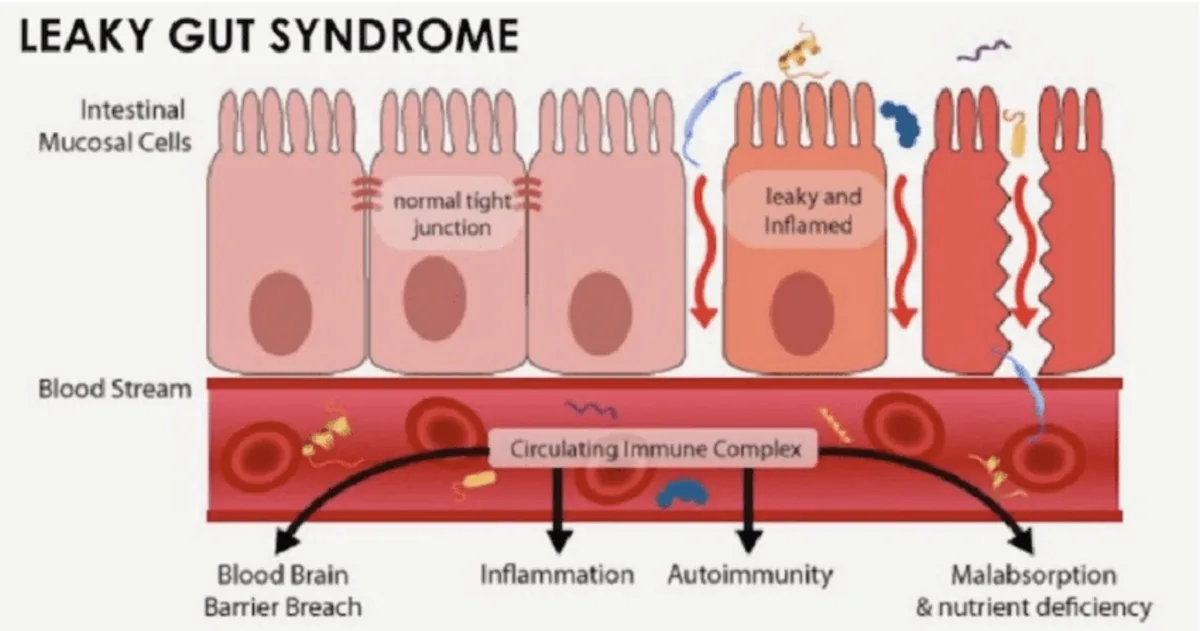
Leaky gut syndrome. It might sound like just another "trendy" diagnosis in the holistic health space, considering how often it's mentioned on social media and in supplement marketing strategies. But it's far more than a fad. It is a very real condition that can lead to significant adverse health outcomes if not appropriately addressed.
Leaky gut or intestinal permeability is when the contents of your gut (i.e., food, microbes, and inflammatory molecules) "leak" out of the barrier and find their way into your bloodstream and surrounding tissues.
Your gut is designed to maintain tight control of what gets absorbed into your body and what remains as waste to be excreted. When waste products are inadvertently absorbed, our health can suffer in a myriad of ways.
What it means if your gut is leaky
Your gut is the interface between the food you eat and the nutrients your body needs to function normally, allowing it to run its metabolic functions and systems. It's essential to have an efficient gut barrier, as it determines what good things to let in and what bad things to keep out.
The barrier of your gut lining is made up of several important layers:
- Lumen — This is the hollow inside of the GI tract
- Mucosa — This is a vital layer of mucus that lines the gut. It lubricates the gut, houses the gut microbiome, and protects the gut tissue from the effects of stomach acid.
- Epithelium — This is the first point of contact of food with your gut cells. It is also where most of the mucus production occurs and what makes up most of the surface area of the GI tract.
- Lamina propria — Connective tissue that's full of immune cells
- Muscularis mucosa — A layer of smooth muscle that aids in mucosal movement.
- Submucosa — A layer of connective tissue with more immune cells and more mucus-producing cells.
- Muscularis externa — Cross-sectional muscle layer that moves food through the GI tract
- Serosa or Adventitia — A thin layer of connective tissue that encases and protects the gut.
While this might sound like a fairly substantial barrier system that's in place, absorption occurs at the epithelial layer. Every layer of tissue from the lamina propria outward is full of tiny blood vessels called capillaries. Their job is to supply regular blood flow to pick up the nutrients that are being transferred through the epithelium.
Where we run into trouble is when the epithelium loses its structural integrity.
Where leaks can happen
The surface area of your gut is massive.
If you spread it out, it would cover about 2 tennis courts. That's because the epithelial layer is covered with hair-like appendages that protrude into the lumen, called villi. You need this much surface area for your gut to come into contact with sufficient nutrients to support your health.
As you can imagine, if this massive sheath of tissue becomes "leaky," there's a lot of potential for issues.
How the gut becomes leaky
Between each and every enteric cell that makes up the epithelium is a connection point called a "tight junction" (TJ). These act as gatekeepers of the bloodstream. They regulate the influx of water and nutrients from the lumen into the bloodstream.
If the TJs become loose or damaged, undigested food particles, toxins, and microbes can pass through into the circulation.
Just behind the epithelium layer of the gut is the lamina propria, which is full of immune cells. They are there to protect you from potentially dangerous invaders that can make you sick. When undigested food, toxins, and microbes come into contact with these immune cells, they trigger an inflammatory response.
Consequences of a leaky gut
Because the surface area of the gut is so vast, and behind each of these cells are immune cells ready to spring into action at the site of any foreign invaders, we can quickly see the magnitude of potential issues that a leaky gut syndrome can bring.
It is estimated that 70% of your immune system resides around the gut lining. When these immune cells are chronically activated, we can experience a host of health problems.
Symptoms
Digestive symptoms
Bloating and abdominal distension
Feeling full and swollen in the abdomen
Gas and flatulence
Excessive gas production and passing
Abdominal pain or cramping
Discomfort and pain in the stomach area
Acid reflux/heartburn
Burning sensation in the chest and throat
Nausea
Feeling sick to the stomach
Diarrhea or constipation
Irregular bowel movements
Irregular bowel movements
Inconsistent stool patterns
Food sensitivities or intolerances
Adverse reactions to certain foods
Body-wide inflammatory symptoms
Chronic fatigue
Persistent tiredness and lack of energy
Joint pain and stiffness
Discomfort and reduced mobility in joints
Muscle aches
Generalized muscle pain and soreness
Headaches or migraines
Frequent head pain and pressure
Brain fog and difficulty concentrating
Mental cloudiness and focus issues
Memory problems
Difficulty remembering and recalling information
These symptoms often develop into more serious health conditions when leaky gut goes untreated:
Health problems associated with leaky gut as the root cause:
- Irritable bowel diseases (IBD) like Crohn's and Ulcerative colitis
- Irritable bowel syndrome (IBS)
- Autoimmune conditions such as Type 1 diabetes, rheumatoid arthritis, lupus, Sjogren's, and multiple sclerosis
- Food allergies, sensitivities, and intolerances
- Metabolic diseases like type 2 diabetes, metabolic syndrome, and non-alcoholic fatty liver disease
- Eczema, Psoriasis, and Acne
- Fibromyalgia and myalgic encephalomyelitis/chronic fatigue syndrome (ME/CFS)
- Mental health conditions
Generalized digestive issues like bloating, gas, distention, abdominal pain, acid reflux, and nausea, even headaches, joint/muscle aches and pains, and general fatigue can be caused by leaky gut.
Causes
Leaky gut syndrome can be caused by a number of factors. The gut is a complex ecosystem, and many of the root causes of leaky gut can be attributed to dietary and lifestyle factors.
Still, let's break down the specific factors that lead to a leaky gut and the dietary/lifestyle influences that often lead to such issues:
Intestinal inflammation
- Cytokine-mediated disruption — Such as high TNF-α, IL-6, and IL-13 → often caused by infections/gut microbiome imbalances, poor diet, stress, medication, and environmental toxins.
- Oxidative stress and free-radical formation — Often a result of nutritional deficiencies, low antioxidant capacity, high processed food intake, H.pylori infection, alcohol, smoking, environmental toxins, and reduced blood flow to the gut
Microbiome imbalances
- SIBO/SIFO and IMO — Often caused by infection, frequent antibiotic use, poor diet, low stomach acid, chronic PPI use, and chronic constipation.
- Dysbiosis — An overabundance of pathogenic bacteria relative to beneficial ones → results from low fiber intake, high processed carb intake, pathogenic infections like H. pylori, E. coli, and C. diff.
- Underpopulation of microbes — Caused by low fiber intake, frequent antibiotic use, carnivore/keto diets, medications, environmental toxins, and chronic diarrhea.
- Impaired mucus production — Mucus houses the microbiome → results from vitamin A and zinc insufficiencies, low glycine intake, H. pylori, low insoluble fiber intake, and severe intestinal inflammation.
- Pathogenic and parasitic infections — Caused by eating undercooked meat, drinking contaminated water or swimming in contaminated water, frequent international travel, exposure to infected individuals.
Dietary factors
- Gluten consumption — Especially in those with wheat sensitivities → consuming wheat or wheat-containing foods.
- High-fat diet — This is known to disrupt the tight junctions as well.
- High sugar intake/high carb diet — Feeds harmful microbes while starving the good ones.
- Processed foods, additives, emulsifiers, artificial sweeteners/flavors — These are known disruptors of the gut microbiome.
- Food sensitivities and allergies — Repeated exposure to foods that trigger immune responses.
- Insufficient fiber intake — Low fiber diets can disrupt gut microbiome balance.
Stress and lifestyle factors
- Emotional stress and high cortisol levels — This shunts blood flow away from the gut and to the extremities, preparing your body for "fight-or-flight." Reduced blood flow to the gut results in impaired nutrient support and reduced healing capacities.
- Physical stress — Physical trauma and illness are known causes of leaky gut. Even the physical stress of extended endurance exercise is known to cause leaky gut syndrome transiently.
- Alcohol consumption — Alcohol is also known to transiently cause leaky gut.
- Sleep deprivation — Poor sleep quality and insufficient sleep can increase stress hormones and inflammation.
Tests for leaky gut
Based on the current literature and standard testing procedures, there are currently no established standard-of-care tests for leaky gut syndrome, as the clinical research is still in the early stages. There are several markers associated with leaky gut syndrome, but some of these also appear in other inflammatory gastrointestinal conditions.
Several testing methods have been developed with promising clinical validation of their association with leaky gut and related GI conditions; however, they are not perfect. Therefore, a combined testing approach is best until a standardized test is established.
Testing for Leaky Gut includes:
Lactulose-mannitol test
A mix of sugars is consumed, then the ratio of lactulose to mannitol is measured in the urine. These sugars are not digested by the body, and they differ in molecular size. Their presence in the urine, along with the ratios of each, can indicate whether undigested food is escaping the gut and entering the circulation. This test is considered the gold standard for testing leaky gut.
Zonulin
This protein regulates the TJs of the epithelial cells. When elevated in stool or serum, it may indicate the presence of leaky gut. This test has been questioned for its validity and clinical efficacy in confirming leaky gut, as it can be influenced by various other health conditions and factors.
Fecal calprotectin
This protein is present in high numbers when gut inflammation is present. It's tested via a stool test. It's commonly used for confirming IBS and IBD, and is a valid test for general gut inflammation. Generalized inflammation doesn't always mean the root cause is leaky gut, but there is often a strong correlation between the two.
Secretory IgA
This is an antigen of the immune system that plays a crucial role in maintaining the intestinal barrier and its functions. It's measured via a stool test. S-IgA levels above or below the ideal range are associated with various inflammatory conditions of the GI tract. Like the other tests, it is not specific to leaky gut and may be out of balance with other GI issues.
All of these markers, as well as others, are strongly correlated with leaky gut syndrome. However, because they are also associated with other inflammatory GI conditions, it is essential to test a range of assays and have them reviewed by a qualified functional medicine specialist.
These markers are often all included in comprehensive stool tests along with additional inflammatory markers and an assessment of the gut microbiome and pathogenic/parasitic bacteria.
When these markers are looked at in the context of the gut environment as a whole, they provide much clearer data on the root cause of GI symptoms. This better informs the personalized care plan and allows for far greater precision in treatment.
A two-phase approach
The results of your comprehensive stool testing will provide more detailed information on the unique protocol you need to begin supporting your gut. There are many potential root-cause areas that may be contributing, and often, it's more than one factor.
It's best to work with a qualified functional medicine provider to quickly identify the root cause of your leaky gut syndrome and develop a personalized care plan tailored to your unique needs.
Even without detailed testing, numerous excellent dietary and lifestyle choices support various aspects of gut health. Always consult your healthcare provider before making any changes to your diet.
Phase 1: Remove triggers
- Eliminate inflammatory foods — Gluten, processed foods, added sugars
- Address infections and microbiome imbalances
- Manage stress and lifestyle factors
Phase 2: Support and replenish
- Support digestion and nutrient absorption
- Replenish beneficial gut bacteria
- Support the gut lining with targeted nutrients
Conclusion
Leaky gut syndrome is a legitimate health condition that deserves serious attention, not dismissal as just another wellness trend. The research is clear: when your intestinal barrier becomes compromised, it can trigger a cascade of health issues affecting everything from your digestion to your immune system, mental health, and beyond.
The good news is that with the right approach, leaky gut can be addressed. By identifying and removing triggers, supporting your gut microbiome, and providing your body with the necessary nutrients to repair itself, many people experience improvement over time.
Remember that progress is rarely linear—you may experience ups and downs along the way. Be patient with your body and consistent with your protocol. If you're dealing with complex symptoms or multiple health conditions, working with a qualified functional medicine practitioner can help you develop a personalized plan that addresses your unique needs and concerns.
Your gut health is foundational to your overall well-being. Taking steps to address leaky gut isn't just about improving digestive symptoms—it's an investment in your long-term health that can pay dividends for years to come.
Further reading
For more on this topic from independent sources:
- Camilleri M. “The Leaky Gut: Mechanisms, Measurement and Clinical Implications in Humans.” Gut. 2019;68(8):1516–1526. https://pmc.ncbi.nlm.nih.gov/articles/PMC6790068/
- Camilleri M, Vella A. “What to do about the leaky gut.” Gut. 2022;71(2):424–435. https://pmc.ncbi.nlm.nih.gov/articles/PMC9028931/
- Vanuytsel T, Tack J, Farre R. “The Role of Intestinal Permeability in Gastrointestinal Disorders and Current Methods of Evaluation.” Front Nutr. 2021;8:717925. https://pmc.ncbi.nlm.nih.gov/articles/PMC8427160/
If you’re interested in taking a proactive approach to your health, book a 30-minute discovery call.
Book a Discovery Call